Units of Inquiry Archive

What is Balanced Leisure?

Posted February 7, 2013 By jzraskin@gmail.com

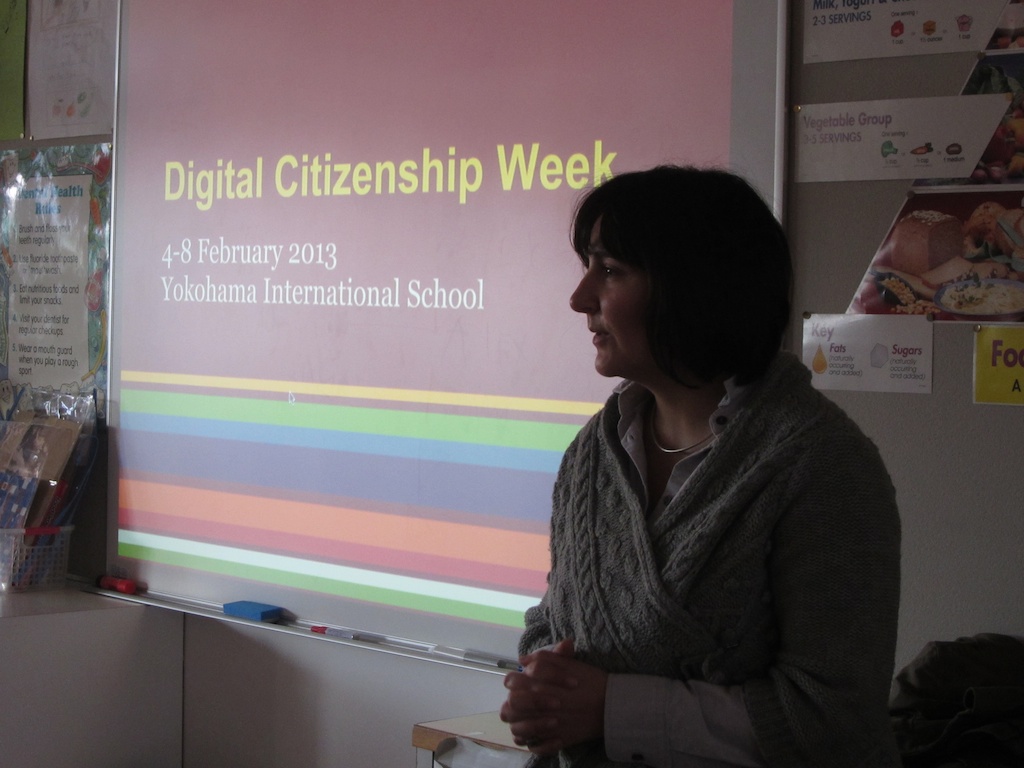
This week was Digital Citizenship Week at YIS. Across the school, students were exploring what it means to be a citizen in an online world. In 2R we spoke to a degree about online safety, and different students online habits, but it was in exploring ideas of finding balance that we really got into it.

At present we’re knee-deep in a Unit of Inquiry looking at how lifestyle choices that people make can affect their health. As part of this, we were learning about leisure, and considering the different ways we choose to spend our free time.

On Monday, Ms Elif came into our class and shared a video. Take a look at it!
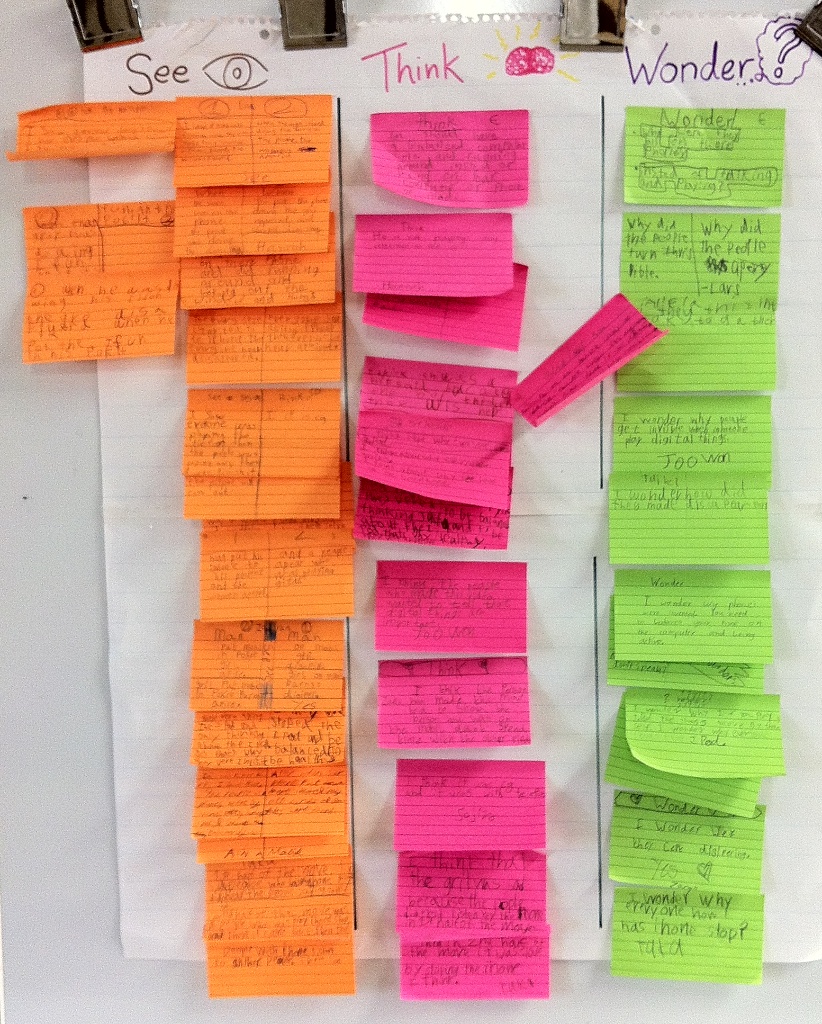
After watching it a few times we decided that the video was about how we sometimes ignore the people we’re with, when we’re using digital devices. Most students had had experiences of this that they wanted to share.

We used a See, Think, Wonder thinking routine to explore what we saw in the video, what we thought it might be about and what questions we had.
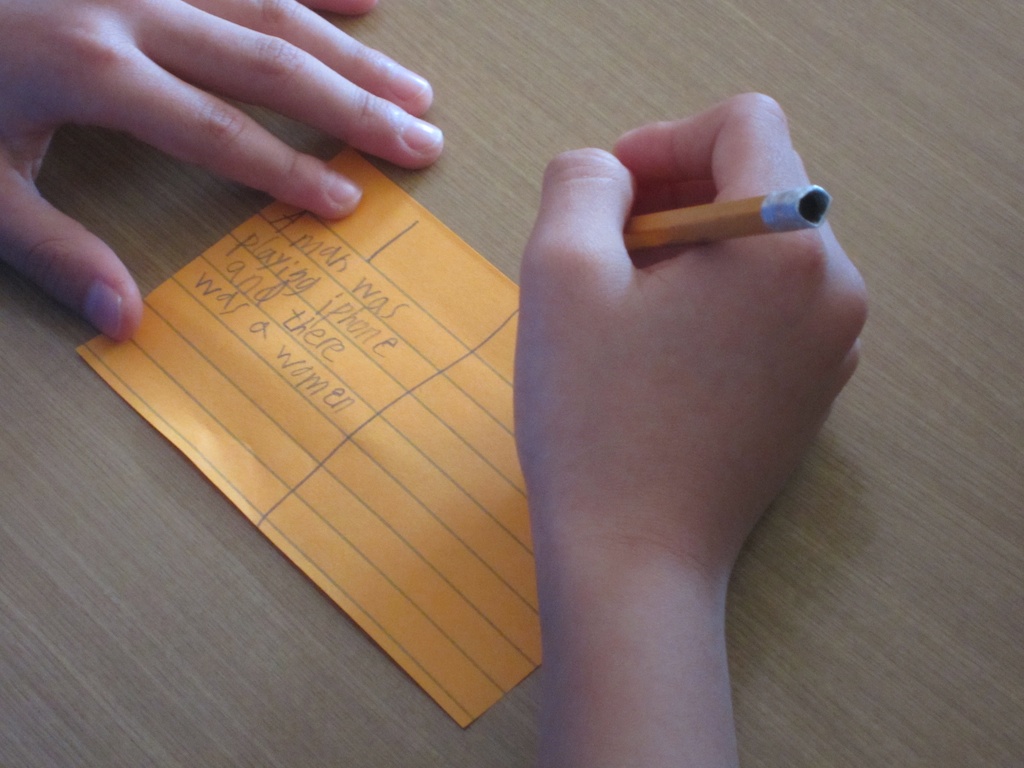
We spoke about how maybe the ideas around balanced nutrition that we’d been exploring could be connected with ideas around balanced leisure time. When the counselor, Ms Kumamoto, came to join us we did some thinking about the advantages and disadvantages of screen-based and non-screen based leisure choices.

We decided that we would track our leisure time for a few days to get an accurate understanding of how balanced our own behaviours were. So, over Tuesday and Wednesday students tracked the details of their leisure activities. We considered whether they were indoor or outdoor, screen or non-screen based, exciting or relaxing, done alone or together with others, and how we felt when we’d completed them. We also kept track of how many minutes we spent doing each, which was a great way to learn a bit about elapsed time.
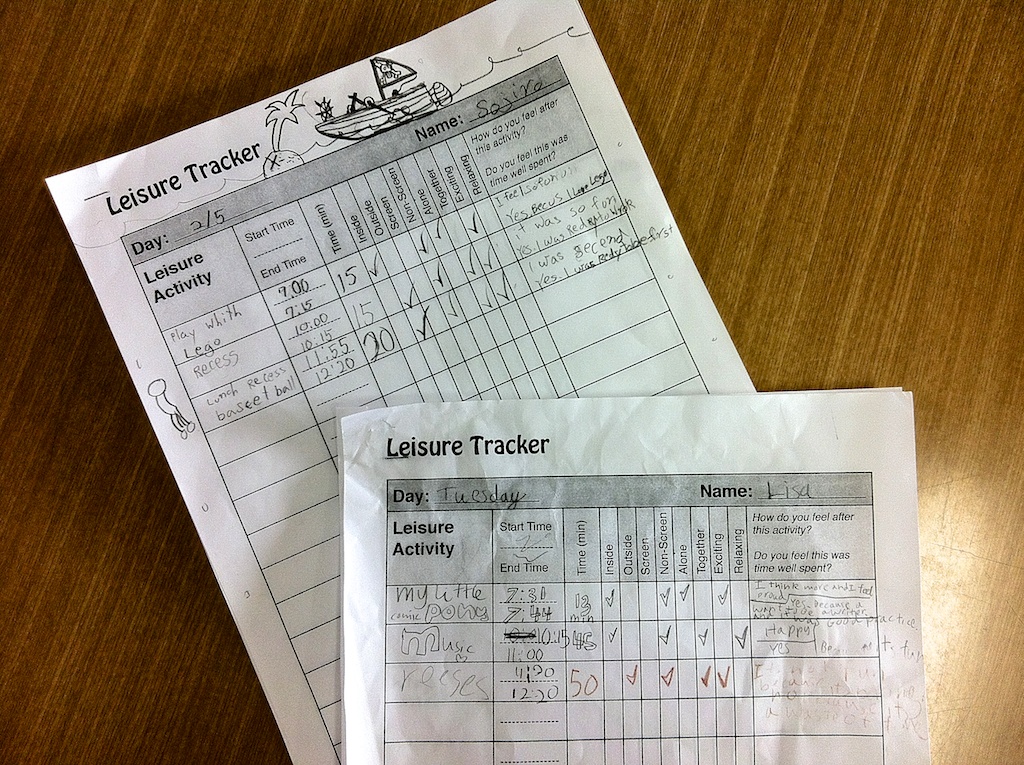
After two days of recording, on Thursday students analysed their leisure habits, looking for patterns. Many students observed big imbalances in terms of how much of their leisure time was spent indoors vs out, or doing screen-based vs non. Armed with this better understanding of our leisure habits, some students reflected on what goals they could set to better balance their leisure time. Other students just realised that with all of their after school commitments they felt they had far too little free time to begin with.

On Friday, we’ll be sharing some of what we learned about balancing our leisure time at an assembly. Seven 2R students decided that they wanted to participate and sat down to plan what they wanted to say and how they would share the responsibilities. Stay tuned for more. Now go and enjoy some non-screen leisure too!


2 Comments so far. Join the Conversation

Storytelling at the Shin Yamashita Hoikuen

Posted February 6, 2013 By jzraskin@gmail.com

Sometimes everything comes together in one learning experience…

Throughout this year we’ve been speaking at YIS about Service Learning, and ways in which our students can make deeper connections with our community. One consideration was finding another school to connect with, to take our students out of our comfort zone and offer a window into a very different setting. When the idea was raised of visiting a local preschool to share Japanese stories, we were very excited.

This idea was not only a perfect fit for our Unit of Inquiry exploring storytelling, it was also a very authentic connection to our community and a really powerful reason for students to improve their Japanese reading.

We braved the rain and marched down the hill to the hoikuen. Students introduced themselves, shared a song, read stories, then played a few circle games. It was great to see the initial intimidation of being in a new environment wear off as students read and played games together.

1 Comment. Join the Conversation

Yoga

Posted February 6, 2013 By jzraskin@gmail.com

As 2R are exploring health and living balanced lifestyles in many ways, we were lucky enough to receive an offer from Rachel, Isaiah’s mom from 2Q, to come and lead us through three in-class yoga sessions. As soon as students saw it listed on the the schedule there were squeals of excitement. The class was quite focused and committed throughout the session and we’re excited that Rachel will be returning for two more classes after ski break!


2 Comments so far. Join the Conversation

What’s For Lunch?

Posted February 1, 2013 By jzraskin@gmail.com

This week, just before lunch, 2R students unpacked their lunches and we spent some time exploring the various food groups they contained. Most students had very balanced, healthy meals! For those with canteen lunch (including myself!) we took photos of everyone’s plates…

Can you guess whose is whose?

Which lunches do you feel are the healthiest?

Which would you most like to eat?

Be the first to comment

A Healthy, Balanced Meal… For Sanagitachi

Posted January 30, 2013 By jzraskin@gmail.com

Just down the hill from YIS, a few blocks away is an area of a very different flavour. Economic hardships have resulted in a large amount of homelessness. One organization working to support homeless individuals in the area is Sanagitachi, a homeless services center with a long term relationship with YIS.

A week ago we were approached by the YIS Sanagitachi group. They were wondering if 2R would be willing to do some fundraising to buy food for the Sanagitachi soup kitchen.

As we were approaching the launch of our unit where we would explore nutrition, among other things, it seemed a perfect time for students to make a contribution to Sanagitachi that made sense for them, while beginning to think about healthy, balanced meals. Students heard a presentation on the center and then set to work designing their own healthy balanced meals, to be used as placemats in the Sanagitachi soup kitchen. They were very pleased to be making their contribution!

Take a look at images of their placemats below…

2 Comments so far. Join the Conversation

Author Visit to 2R

Posted December 13, 2012 By jzraskin@gmail.com

Author and teacher Trevor Kew joins 2R to share a draft of a picture book he is writing. 2R get a chance to listen to the story, make mental images and illustrate the scenes they found they could visualize the most clearly. What a great kick off to our study of storytelling! For more on Trevor Kew, visit trevorkew.com

Author Visit from YIS 2R on Vimeo.

1 Comment. Join the Conversation

The Mysterious Solar Bag

Posted December 2, 2012 By jzraskin@gmail.com

Second grade did an experiment together relating to air and the sun. First, they predicted. Then they observed. Enjoy the action and excitement!

2nd Grade Air Bag experiment 2012 from YIS Academics on Vimeo.

2 Comments so far. Join the Conversation

2R at the Friday Assembly!

Posted November 2, 2012 By jzraskin@gmail.com

A re-post from the YIS Elementary Blog…

On Friday 2nd November 2012, elementary held it’s weekly morning assembly under a clear sunny blue sky! The Grade 5 hosts did a fantastic job running the schedule. The assembly was also well attended by parents and visitors!

First, there was some birthday announcements for Ms Nanwani and Ms Quinn, and a special cheer for “Happy Halloween”.

Next, Grade 4N shared their learning from their recent Unit of Inquiry, Where We are in Place and Time; People continue to migrate for many reasons. Students shared facts about the Ainu culture through a creative “Do you know… ?” skit.

Then, Grade 2R performed an Australian story that was part of their Grade 2 Cross Cultural Lunch. The students told an Australian Indigenous story from the Aboriginal Dream time, where they sang and played Orff instruments and acted out parts of the story.  The elementary music teacher, Ms Bridgewater, had collaborated with Grade 2 on their Unit of Inquiry, Where We are in Place and Time; People can be enriched by their own cultures and the cultures they connect with throughout their lives.

Friday Morning Assembly from Shanel Catasti on Vimeo.

Afterwards, the PTSA representative reminded the school community to come along to the YIS International Food Fair on Sunday 3rd November, from 10:00-15:30. After a few announcements from Ms. Pender, the Grade 5 hosts wishes everyone a “Freaky Friday”!

1 Comment. Join the Conversation

The first unit of inquiry grade two embarked on this year was a study of ways in which we are enriched by our own cultures and the cultures we connect with throughout our lives.

As we began asking questions along a line of inquiry exploring similarities and differences between cultures, we struggled with ways to collect and make sense of the answers.

Among the Mathematics learning outcomes for this year, in the Data Handling strand, is the Conceptual Understanding that Data can be collected, organized, displayed and analyzed in different ways. This was a perfect opportunity to bring together Maths learning with our Inquiry studies.

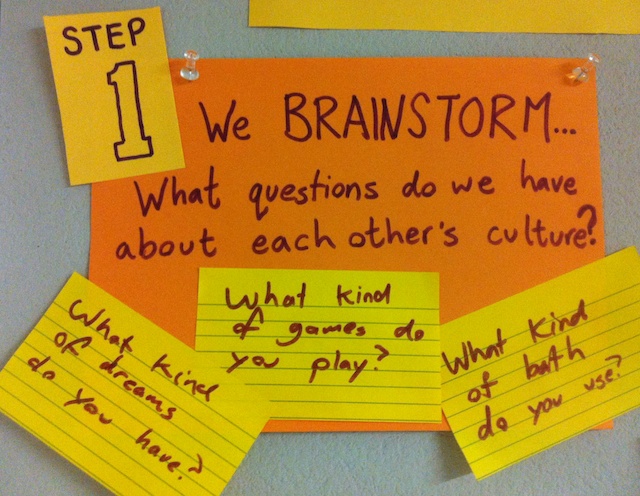
Students began by building on the sort of questions that had been bubbling up already by brainstorming a wide range of curiosities about differences and similarities amongst families and cultures.

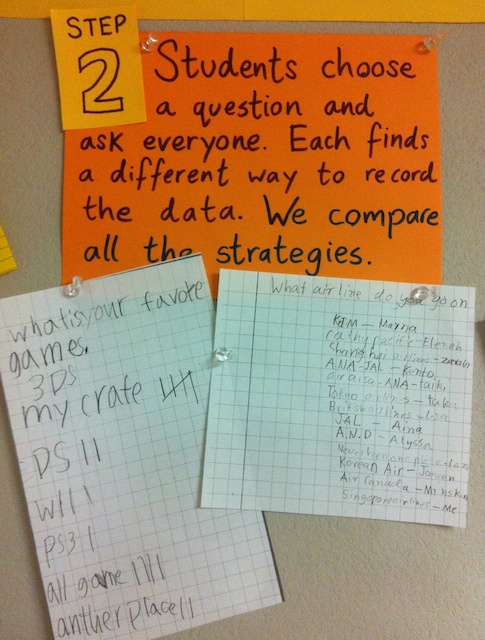
I challenged them to find answers to their questions from our class. Each student chose a different question of personal importance or interest and used their previous knowledge of collecting answers to their questions to go about surveying their peers.

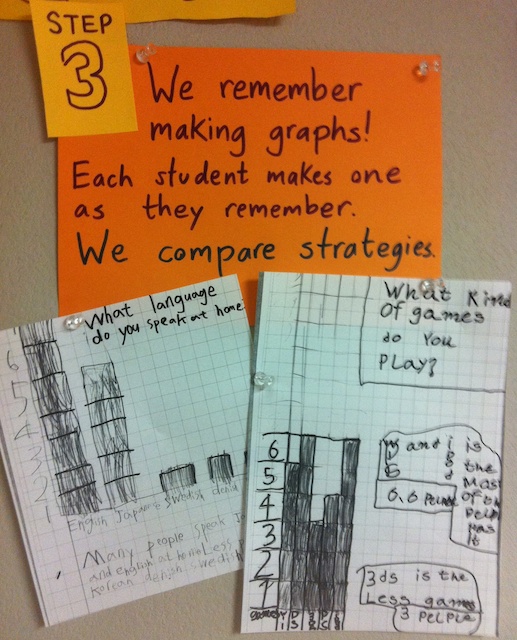
Each student had recorded the data in different ways so we took some time to analyze the features of their data collection systems and students explained the thinking behind their strategies. One student recalled having made graphs of data in the past, as a way of clearly presenting the information, so students discussed what they remembered about this, and had a go at making their own from the data they’d collected.

We compared the varied graphing strategies students had used and the conclusions they had been able to draw from their data. We followed this with a discussion of what we thought some of the most successful features of data collection systems had been, that had allowed for us to most clearly, accurately and quickly collect information.

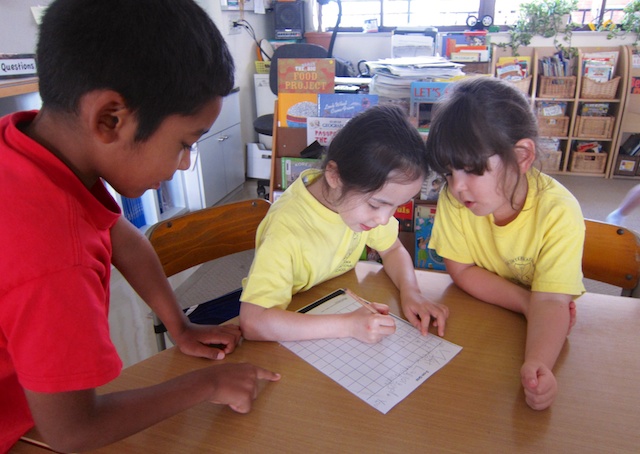
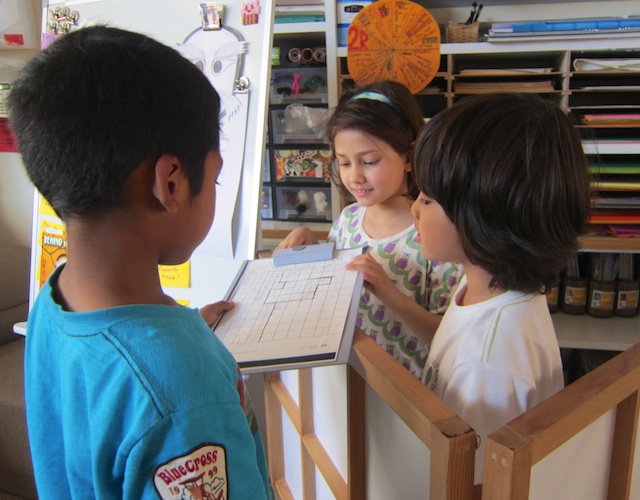
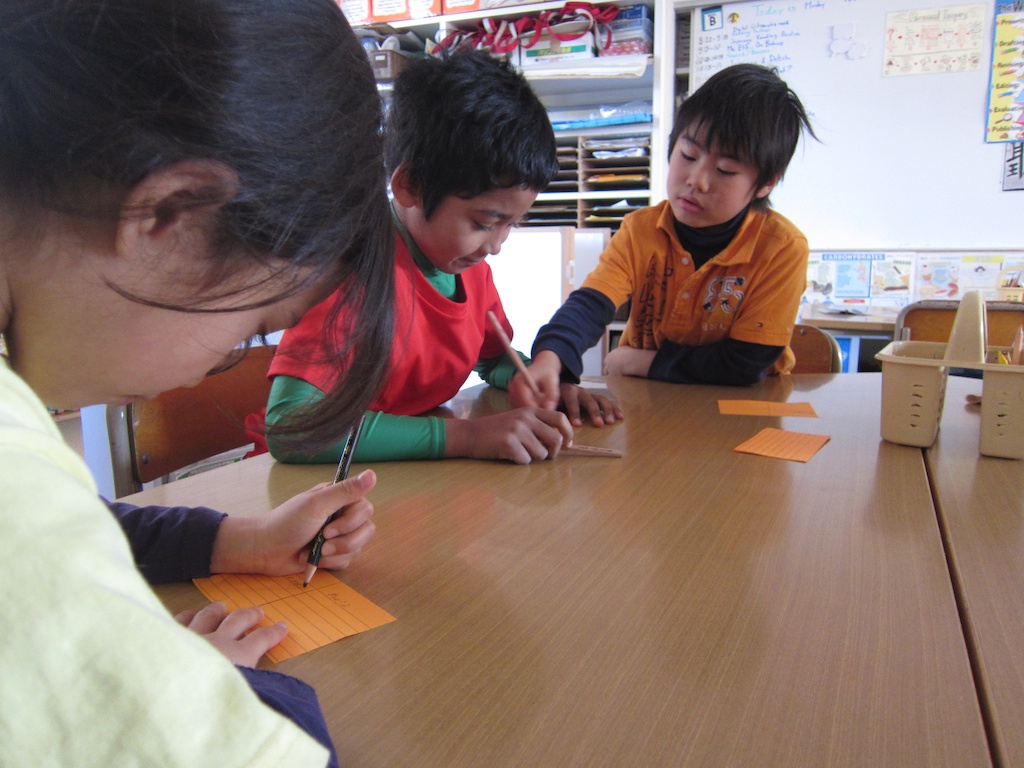
In small groups, students worked together to build new data collection tools, based on our previous discussions and examples, to most effectively get answers to the questions they were posing.


Students collaborate on a data collection tool.

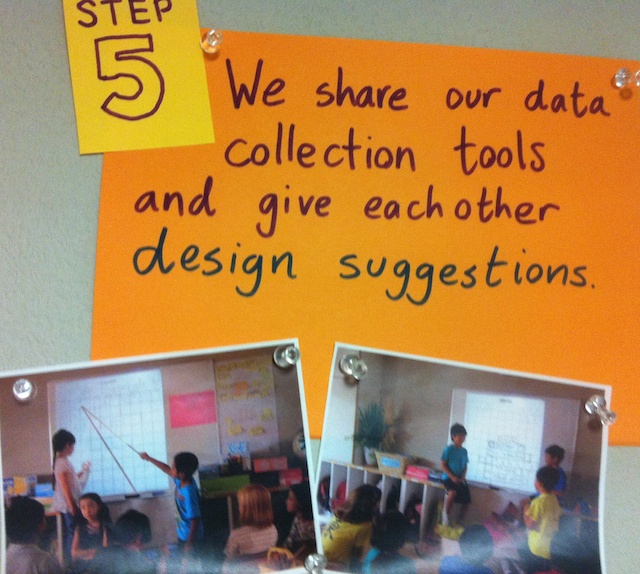
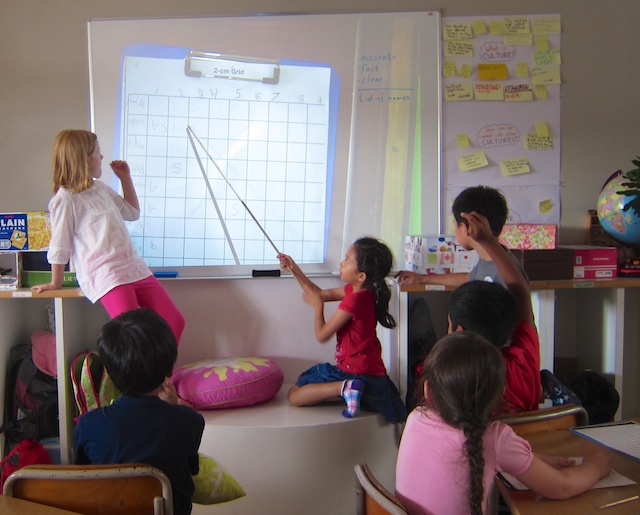
With these complete, groups presented their tools to the class and used the questions and suggestions to refine their tools before trying them out.

Students present their collaboratively-created tools for class questions and suggestions.

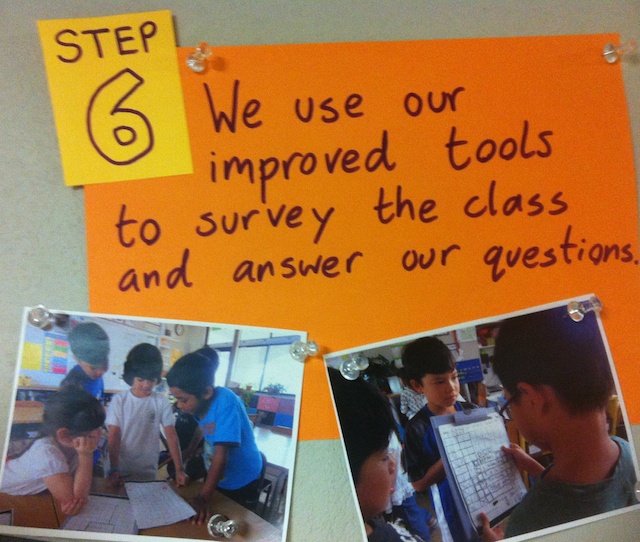
Finally, it was time to put our team-created and class-critiqued tools to the test, by surveying the class. How accurate, clear and fast would the tools allow our data collection to be?


Students test their tools by surveying their peers.

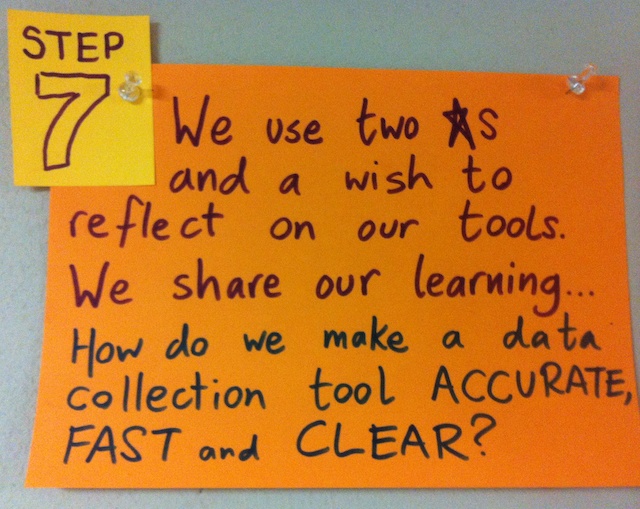
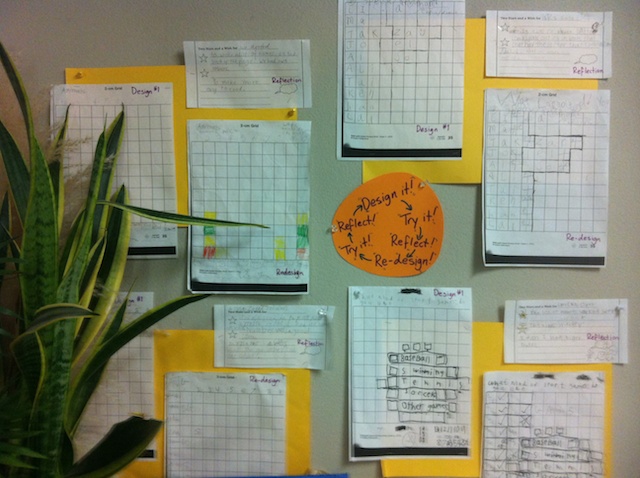
Having collected data with their tools, groups used the Two Stars and a Wish reflection strategy to identify two elements that had worked exceptionally well about their designs, and one feature they could improve upon.

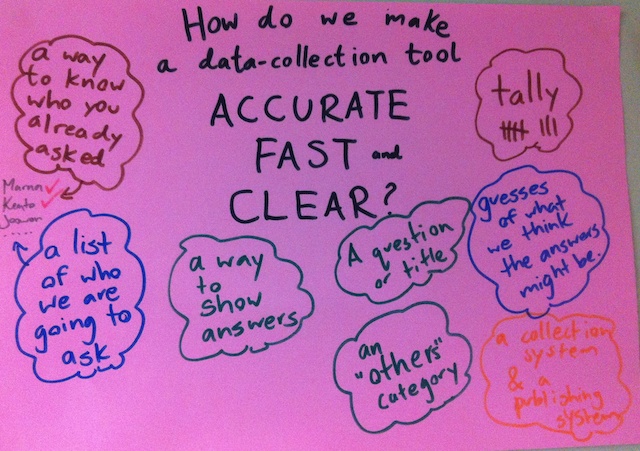
We shared these with the rest of the class and developed a collaborative list of features we all considered key to making a data collection tool as Fast, Accurate and Clear as possible.

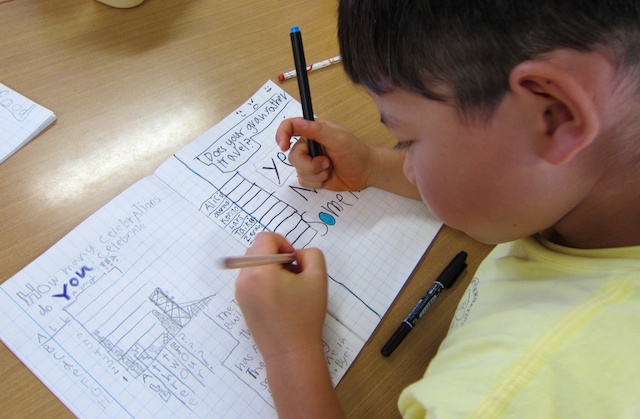
Students used this list to support their posing of a final, independent question. They each created their personal, ultimate data collection tool and surveyed the class.

Students apply new understandings in creating their own super-data-collection tools.

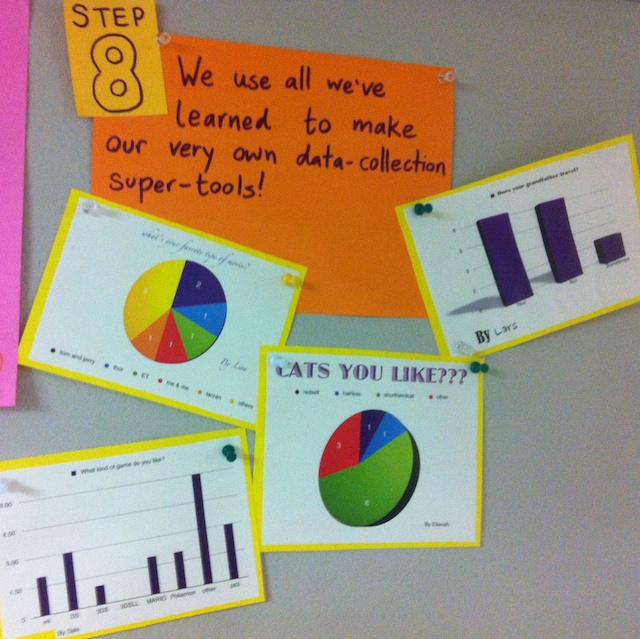
Finally, we came back to the discussion of graphing and presenting our data. I introduced the simple graphing features of the Pages application to the class and we looked at how our understanding changed depending on the wide variety of ways we could display the data. Some students considered pie graphs to be most appropriate for communicating their answers, others preferred bar graphs. Each student explained the thinking behind their choices for a way to present their data.

We reflected on our learning through this process as being a design cycle. We looked at our original data collection tools and graphs, how they’d been improved through discussion and group work, then further improved by presentation and critique, tested by trying them in action, better understood through reflection and sharing our learning and finally improved in our individual final tools and graphs.

In reflection, one student mentioned proudly how much better his final survey and graphing worked, compared to his first attempt. Yes, agreed another, but we could still make them better next time…

—–

The orange posters above are from the classroom display I created to document this inquiry process. All photos are my own.

5 Comments so far. Join the Conversation

Mad Science Team Time!

Posted October 14, 2012 By jzraskin@gmail.com

This past week’s Team Time, always a favourite in second grade, took on a whole other shape when it turned into Mad Science Team Time!

In honor of our new unit ‘Climate affects people’s lives‘, the grade 2 students enjoyed weather-related science explorations and experiments.

Students had the choice of investigating wind, water, or air pressure!

Enjoy the slideshow…

1 Comment. Join the Conversation